


All About Onsen: Japan’s Favorite Relaxing Pastime


Traveling in Japan often means walking over 20,000 steps a day, which can get exhausting. But Japan isn’t only about the excitement and long days of exploring, you can also enjoy a more relaxing side of the country. Imagine soaking in warm water while taking in beautiful views of nature. That’s the onsen experience.
With over 27,000 hot springs spread across Japan, you’ll easily find a place to unwind and recharge after days of adventure. But there’s more to onsens than meets the eye. Let’s take a closer look at what onsens are, how they began, and the different experiences you can enjoy.
For Onsen Rules, read here: https://www.givingtuesday.jp/post/a-beginner-s-guide-to-onsens-expectations-vs-reality-onsen-rules

What Is an Onsen?
An onsen (温泉) is a hot spring bath where the hot water naturally comes from heat deep beneath the earth. Because Japan is filled with mountains and active volcanoes, it has a lot of geothermal activity. This, along with its mineral-rich waters, is why the country is blessed with many onsens that are known for their health benefits. That’s also why visiting an onsen is such a popular and well-loved way to relax in Japan.
With so many hot spring baths across the country, you might think any hot spring bath can be called an onsen, but that’s not actually the case. In Japan, the use of the word “onsen” is regulated to protect this natural resource. Some of these rules focus on the water’s temperature and composition. For example, the water must be over 25°C, although there are a few exceptions. It also needs to come naturally from underground, either flowing up to the surface on its own or being brought up by drilling into the ground.

The History of Onsen
Onsens can be traced back to ancient times. Because of Japan’s unique landscape, its high volcanic activity naturally creates many hot springs. Their healing effects were even mentioned in old texts like Kojiki, Nihon Shoki, and Manyōshū.
Over time, different periods in history used onsens in their own ways. During the samurai era of the Kamakura to Sengoku period, warriors would visit onsens to help heal wounds from battle. In the Edo era, onsens became more accessible to the general public. By the Meiji era, scientists began studying onsens more closely. Moving into the Showa era, there was already scientific support for their health benefits.
Today, the way people view onsens has shifted. While they are still known for their health benefits, they are now more commonly enjoyed as a way to relax, travel, and sightsee. Many people also visit onsens to spend quality time with friends and family.
Types of Onsens
For a long time, people have believed that onsens are great for the body, and honestly, it’s easy to see why. They’re relaxing, detoxifying, and can support both physical and mental well-being. The warm water helps improve blood flow and keeps your body working more smoothly. If you’ve been walking or working a little too much, soaking in an onsen can help ease muscle aches and even help you sleep better. Sometimes, just taking the time to relax in one is already enough to make you feel refreshed.
Another reason onsens are so special is because of the minerals in the water. These minerals give different onsens their unique benefits, which is why you’ll come across a variety of types, such as:

⦁ Sulfur onsens (硫黄泉) are easy to recognize because of their cloudy water and strong smell, often compared to rotten eggs. They help open up blood vessels, allowing blood to flow more easily and leaving your skin feeling softer. Because of this, they’re believed to help with acne, skin spots, small cuts, eczema, psoriasis, and even joint pain.

⦁ Iron onsens (鉄泉) are rich in iron and have a reddish-brown color. This color comes from a reaction between the water and oxygen in the air. These onsens are known for helping the body retain heat.

⦁ Carbonated onsens (炭酸泉) are a favorite if you want your skin to feel smooth and soft after a soak.

⦁ Electric onsens (電気風呂) are a bit more unique. They use very mild electric currents in the water to help soothe muscle tightness, stiffness, and soreness. It might sound surprising at first, but many people find it quite effective.

Beyond the physical benefits, onsens are also great for your mental health. Many are located in the mountains and surrounded by nature, giving you a calm and peaceful environment to unwind. Just being there, soaking in warm water and breathing in fresh air, can help melt away stress and clear your mind.
There are also different ways to enjoy an onsen, depending on what kind of experience you’re looking for. You can go for indoor or outdoor baths, public or private ones, and options that fit different budgets. Here are a couple of common ways to experience them:

⦁ Ryokan (旅館) are traditional Japanese-style inns that often come with their own onsens. Guests usually stay overnight and enjoy traditional meals as part of the experience. They can be on the pricier side, starting from around 15,000 yen or more, but many people feel it’s well worth it.

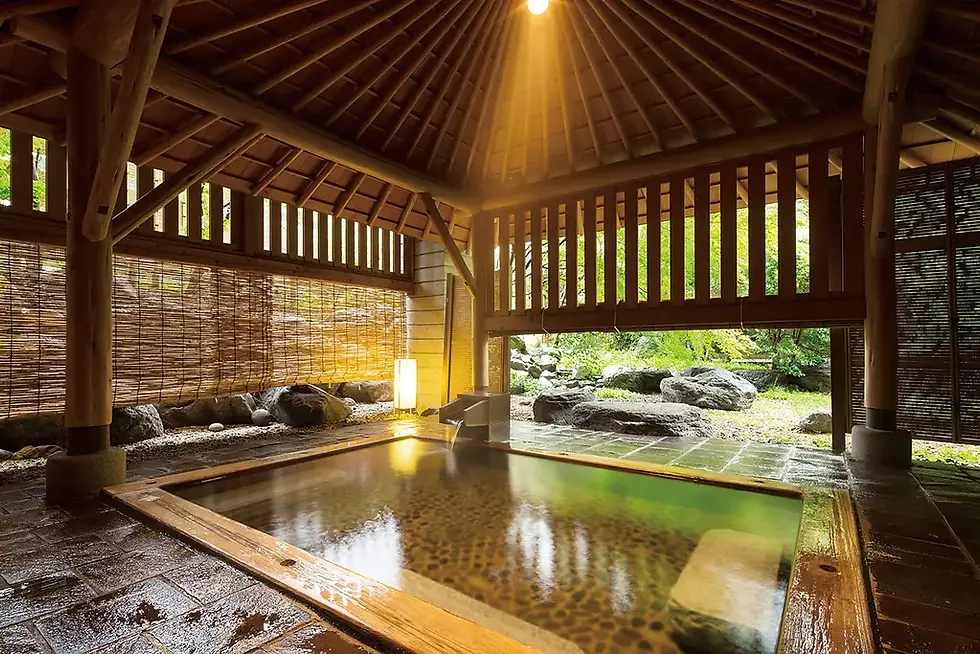
⦁ Rotenburo (露天風呂) are outdoor baths where you can soak while enjoying nature. They’re especially memorable in winter, when you can feel the cold air on your face while your body stays warm in the water, creating a really unique and relaxing experience.

Here’s a fun fact: you can actually drink onsen water! This practice is called insen (飲泉). In some famous onsen areas, there are designated spots where you can safely drink the water, either directly or from a container. Just don’t drink from the bath itself!
While it’s not very common in Japan, some people believe that if soaking in onsen water is good for you, drinking it might be too. There is some research on this. One study by the Oita Prefectural Pharmaceutical Association suggests it may help support metabolism and blood production. On the other hand, research from the Japan Spa Association says it can affect the digestive system and liver. Because of this, it’s always a good idea to check with a doctor if you’re unsure.

If you’re traveling through Japan, visiting an onsen is something you shouldn’t miss. With its many physical and mental benefits, it’s one of the best ways to truly relax. At the same time, it offers a meaningful way to unwind while connecting with Japanese culture. Once you experience it for yourself, it’s easy to see why it remains a favorite pastime for so many.
Picture Sources:
https://www.bathlier.com/media/wp-content/uploads/sites/3/2020/11/refine/ofuro_onsen.jpg
https://cdn-ak.f.st-hatena.com/images/fotolife/b/balladlee/20250111/20250111160053.png
https://www.visit-tochigi.com/wp-content/uploads/2021/12/3DA76ACDF630A7343ED2B325A79B3DC5.jpg
https://s3-ap-northeast-1.amazonaws.com/thegate/2021/04/09/17/33/42/onsen_top.jpg
Sources:


コメント