


Japanese Calligraphy


Calligraphy is a writing and art form that is used in many cultures around the world. While it has different names depending on where it is, in Japan it is referred to as 書道 (しょどう - shodo), which breaks down into “the way of writing”. It uses kanji and kana (hiragana and katakana) characters for its writing system, while being written top to bottom and right to left, and maintaining a connective flow between the character strokes. There are four very important materials to practice Japanese calligraphy:
筆 (ふで - fude)
A brush with a bamboo handle. The bristles are typically made out of animal hair/fur in various lengths and textures.
墨 (すみ - sumi)
The specific type of ink used, made from soot and glue. It can be in a solid stick form or a diluted liquid.
硯 (すずり - suzuri)
A container that breaks down the sumi ink sticks to turn them into a liquid ink. This makes it easier to be picked up by the brush to begin writing.
和紙 (わし - washi)
A type of handmade paper, often from plant fibers. This is used for the actual writings to lay on.
Other materials can be used as well, but are often seen as optional or specific to the calligrapher. Some artists will use paperweights, personal seals, desk pads, and more! It is a personal way for the individual to control their 書道 (しょどう - shodo) works.
Types of 書道
書道 (しょどう - shodo) is broken down into three types; 楷書 (かいしょ - kaisho)、行書 (ぎょうしょ - gyousho)、草書 (そうしょ - sousho). The three types can be broken down similarly to different fonts when typing. As well, they are often compared to the English script and cursive writing styles. The three types are as follows:

楷書 (かいしょ - kaisho)
This style is the least cursive of the three; it is a blocky standard script. The characters remain completely separate when written this way. The text is often easier to read and closest to the original kanji stroke orders.

草書 (そうしょ - sousho)
This calligraphy style is completely cursive. It lends to the more artistic side; kanji become almost illegible. It is seen as almost abstract. This style focuses on the aesthetic look and the freedom of expression as a whole. It is less about the meaning of the characters.

行書 (ぎょうしょ - gyousho)
This style is in between the two listed above. It isn’t exactly standard print or cursive. It remains readable to an extent, but gives an artistic flow. The letters partially blend together, but the characters are still distinct.
Even within these styles, the calligraphers have creative freedom. The intensity of their brush strokes, the way they hold their 筆 (ふで - fude), and more intricate details. Since it is a writing technique and art piece, each individual has a unique way their works come out.
History of 書道

書道 (しょどう - shodo) has a long-standing history that actually doesn’t start in Japan. It was formally introduced to Japan from China. China introduced kanji to Japan in the 6th century, but it is speculated that it could have been introduced even earlier (Imai, 2025).
While some characters between the languages may look similar, they tend to have completely different meanings and sounds. These differences are also why we have the 音読み (おんよみ - on’yomi) and 訓読み (くんよみ - kun’yomi) readings. 音読み (おんよみ - on’yomi) was borrowed from old Chinese pronunciations, and 訓読み (くんよみ - kun’yomi) was all native Japanese pronunciations. Both are now what we know as modern Japanese.
While 音読み (おんよみ - on’yomi) is no longer how Chinese characters are read, it is an important piece in why the Japanese language and, therefore, calligraphy are the way that they are
Moving into the history of calligraphical writing itself in Japan, 書道 (しょどう - shodo) was not always an available practice to the general public. As with most forms of literature, reading and writing were something left to the higher classes. That means that a lot of older 書道 (しょどう - shodo) works tend to be from nobility of some kind. As with many things, 書道 (しょどう - shodo) and other forms of reading and writing became available to the middle and lower classes.
They became so prevalent that during the 江戸時代 (Edo Period), temple school curriculum would involve 書道 (しょどう - shodo); kids would practice calligraphy. These temple schools were called 寺子屋 (てらこや - terakoya). During that time, literacy rates grew to 70% of Japanese citizens.
Modern Practices of 書道
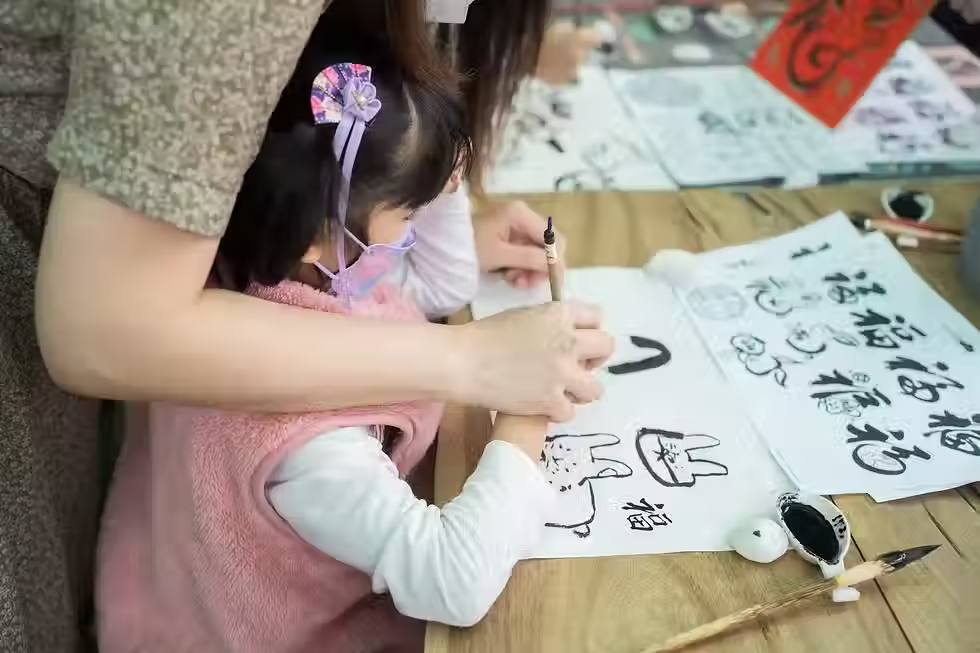
書道 (しょどう - shodo) is still used today. It is still taught in elementary schools, so children often begin learning in around third grade. However, there are many classes for adults to take depending on their skill level. Some individuals try it for the first time in adulthood and begin taking classes on it in their local communities, while others keep it as a hobby from their youth.
While classes are popular, they aren’t the only way that Japanese calligraphy is used. 書道 (しょどう - shodo) is often seen on street signs for restaurants and shops to show their name or what they offer. Calligraphy is also seen on homes, temples, special packaging, etc. When it comes to more sacred places, it tends to be a wish or a positive message. One example is a New Year's tradition in Japan. There is a practice called 書き初め (かきぞめ - kakizome), which represents the first kanji writing of the year. This is a special calligraphy practice because it often reflects the New Year's resolutions or wishes.
Western Calligraphy

In the western part of the world, calligraphy is a little different. Like Japan, the United States adopted calligraphy from elsewhere, Rome. This is also where they adopted the Latin alphabet from.These are among the most noticeable differences between the two types of calligraphy. Traditionally, letters remain distinct and disconnected through this process.
Materials also differed, and often included carvings into stones, which later transformed into reed pens and feather quill pens. As well as more modern-day calligraphy uses tools like fountain pens. Despite so many advancements in technology, calligraphy remains used in The United States as well. Although it is not as common as in Japan, it is still seen as elegant and used on invitations, logos, and signatures of sorts.
Personal experience with 書道

I was given the amazing opportunity to practice 書道 (しょどう - Shodo) at the Asakusa Culture Tourist Information Center. The instructors were very excited to teach, and eager to help beginners like me. While I have had practice with writing kanji drills, I had never done calligraphy before. I found myself trying to do thinner strokes to make my lines more defined and legible, and had to remind myself that the point wasn’t for it to be readable. The method that was used during this lesson was 草書 (そうしょ - sousho), to creatively articulate the bold strokes.
The lesson started with being offered a few different kanji for me to practice and choose from. I went with 星 (ほし - hoshi), which means star. I then moved onto a practice sheet which gave the stroke orders, and the instructors walked me through how thick to make the lines, when to redip the brush, and how to hold it correctly. I got to understand the importance of the weight of each stroke, the order, and how the brush is held. At the end of the lesson, the instructors dried the paper and stroke order sheet so I could take both home with me! While I am by no means a master, I was very grateful for the opportunity to learn and will have to try it out again at some point.
Zen in 書道
Japanese calligraphy practices often intertwine with the ideas and philosophies behind 禅 (ぜん - zen). Zen is a Buddhist practice, and also a shortening of the Zen Buddhism sector. It is a complicated term to boil down simply. In the best short description, it’s a practice of purity, enlightenment, and being the most authentic version of yourself. To read more on the topic of Zen, see our article on Zen Gardens.
Article Sources:
Picture Sources:
https://www.toki.tokyo/blogt/2015/8/26/shodo-japanese-calligraphy https://unsplash.com/photos/calligraphy-and-lotus-flowers-on-a-golden-background-8MxMsVoVoio
https://unsplash.com/photos/a-woman-and-a-little-girl-writing-on-a-piece-of-paper-ugGZ5331_NI
https://unsplash.com/photos/black-and-silver-steel-bottle-opener-KumqyBBIZP0


Very good article. Very educational