


Hanegesho - The Dog Days of Summer


There are many niche holidays celebrated within different cultures, and there are many that go unknown by outsiders due to enculturation or lifelong exposure to cultural history. This can be observed with Japan’s Hanegesho, a holiday that celebrates the end of one season and the beginning of the next. The term “Hangesho” is one that is used rarely in modern-day Japan; however, the term references the eleventh day after the summer solstice, a day brimming with significance for agriculturists.
What is Hanegesho?
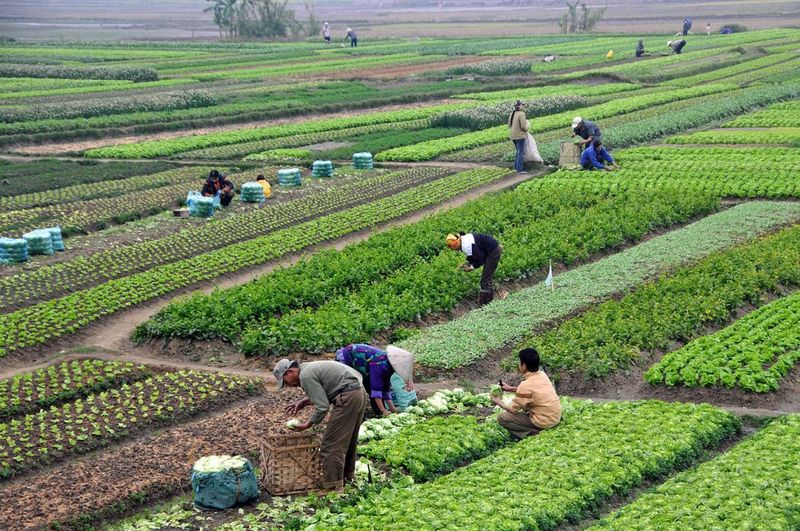
Hangesho tends to be important to agriculturists due to its overlap with one of the busiest times for farmers, as summer is right around the corner. “Hangesho is a more significant milestone for farmers than the summer solstice. It refers to a period that begins on the 11th day after the summer solstice, around July 2, and lasts for five days until the Tanabata festival (July 7)” (https://shun-gate.com/en/power/power_115/). In accordance with this, the day marks the end of the rainy season and the beginning of the “dog days of summer” (https://mag.marukome.co.jp/20240620/19661/).
With this new beginning comes the blossoming of Hange shozu, a gorgeous plant distinguishable by its white variegation and delicate flower buds. The name, “Hangesho”, comes partly from the blooming of this plant, since the plant comes to live around the eleventh day after the summer solstice and acts as an indicator for the start of the holiday season. There is variation in which day Hangesho will fall on each year, and this year it will fall on Thursday, July 2nd. With the arrival of Hangesho, it’s important to watch one’s health and to prepare for the impending and brutal summer heat.
Origins
How is Hangesho distinguished? It’s important to know how the calendar year is divided up to indicate a change in seasons, in Japan there is a practice in which the year is divided up into twenty-four solar terms and seventy-two pentads. Each solar term is determined by the movement of the sun, and they coincide with the winter and summer solstices and the autumn and spring equinoxes. This practice was inspired by ancient Chinese tradition and had spread to Japan in the mid-sixth century during the Asuka period. Each solar term is divided up into three pentads, each of which is four days in duration. The start of the first season is on February 4th; each season consists of essentially a beginning, middle, and end.
For example, the first season is classified as the “Beginning of Spring”; it starts on February 4th and ends on February 18th. The first pentad acts as the beginning of this season and lasts from February 4th to February 8th. The second acts as the middle, lasting from February 9th to February 14th. Finally, the last pentad ends with the season’s end. This is consistent throughout the calendar year, and each “season” has its own name to aid in agricultural practice and seasonal distinction.

For a breakdown of the seasons, visit https://www.nippon.com/en/features/h00124/ where a chart is available!
The Hangesho Flower
The Hange shozu plant not only blooms around the eleventh day after the summer solstice, but it also undergoes different changes with the change in season. It is also known as “Hankesho,” which means “half-makeup”, “because about half of its leaves are covered in pure white powder” (https://ozaki-flowerpark.co.jp/dictionary/6879/). Once the flower blooms, the leaves below the central stem are coated in a white hue, leaving the tips of the leaves green, though the “area that turns white varies from plant to plant, but it’s usually between half and 90%, and the entire leaf never turns completely white” (https://ozaki-flowerpark.co.jp/dictionary/6879/).

Though no one knows why, the leaves turn back to their original green state as the flowers finish blooming, but many people believe that the white color aids in leading insects to pollinate the flowers. These flowers are spread throughout Japan and can even be seen in famous spots like Kyoto and Kamakura.
Food Customs in Select Prefectures
There are many different traditions during Hangesho when it comes to nourishment, and they vary from region to region. For example, in the Reian region located in the Fukui prefecture, there is a “custom of eating grilled mackerel…and it is said to have originated when the lord of Ono (present-day Ono City) distributed grilled mackerel to his people after they were tired from rice planting” (https://www.maff.go.jp/e/policies/market/k_ryouri/search_menu/1752/index.html).

There has also been a tradition around eating octopus in some regions of Japan, since octopi are seen as a high nutritional resource to help fuel the body in the face of severe heat. A symbolic element comes with this practice in some regions, for instance, “In the Kansai region, there's a culture of eating octopus dishes with the wish that ‘the rice will take root in the paddy fields like octopus tentacles.’” (https://www.fun-japan.jp/en/articlesPromotion/14101).

In Sanuki, a city located in the Kagawa prefecture, Hangesho is celebrated as “Udon Day” and locals eat udon noodles to pray for good health during the humid summer months (https://mag.marukome.co.jp/20240620/19661/). Additionally, the end of the “wheat harvest” is celebrated in the Nara prefecture with the consumption of a special type of mochi made with rolled wheat and rice (https://matcha-jp.com/en/19953). Customs vary from region to region, but ultimately are practiced to celebrate the changing of seasons and in anticipation of the ones to come.
-------------
Works Cited
“24 Solar Terms.” Baidu Encyclopedia, baike.baidu.com/en/item/24%20solar%20terms/987575. Accessed 5 July 2026.
“Celebration of Seasonally Based Holidays and Festivals in Japan: A Study in Cultural Adaptation.” By Steven L. Renshaw.
“For Everything There Is a Season: Japan's Solar Terms.” Musubi Kiln Journal, musubikiln.com/blogs/journal/for-everything-there-is-a-season-japans-solar-terms. Accessed 5 July 2026.
“Half Summer Garden (Hangeshō-en).” Mitsue Tourism Association, www.mitsue-kanko.jp/sightseeing/%E5%B2%A1%E7%94%B0%E3%81%AE%E8%B0%B7%E3%81%AE%E5%8D%8A%E5%A4%8F%E7%94%9F%E5%9C%92/. Accessed 5 July 2026.
“Hangeshō.” Isetan Door, isetandoor.mistore.jp/shop.csguide--260618_hangesho__html.htm. Accessed 5 July 2026.
“Japanese Food Culture Search: Seasonal Dishes.” Ministry of Agriculture, Forestry and Fisheries, www.maff.go.jp/e/policies/market/k_ryouri/search_menu/1752/index.html. Accessed 5 July 2026.
“Japan's 24 Solar Terms.” MATCHA, matcha-jp.com/en/19953. Accessed 5 July 2026.
“Seasonal Foods in Japan.” FUN! JAPAN, www.fun-japan.jp/en/articlesPromotion/14101. Accessed 5 July 2026.
“Seasonality in Japanese Cuisine.” Marukome Magazine, 20 June 2024, mag.marukome.co.jp/20240620/19661/. Accessed 5 July 2026.
“The 24 Solar Terms and Japanese Seasonal Living.” ShunGate, shun-gate.com/en/power/power_115/. Accessed 5 July 2026.
“The Beauty of Japan's Four Seasons.” Nippon.com, www.nippon.com/en/features/h00124/. Accessed 5 July 2026.
“Understanding Hangeshō.” Ozaki Flower Park, ozaki-flowerpark.co.jp/dictionary/6879/. Accessed 5 July 2026.
“Understanding Japan's Seasons.” JR East Media, media.jreast.co.jp/articles/3219. Accessed 5 July 2026.


コメント