


Hatsuuma (初午): The First Horse Day at Inari Shrines in Japan


If you ever visit an Inari Shrine in Japan around February, you might notice something different from your regular visit: special offerings, unique foods, and a lot more visitors. That’s because it’s Hatsuuma (初午), one of the most important days in the Shinto calendar for Inari shrines. But what is it really all about? Let’s jump right in!
What Is Hatsuuma?
Hatsuuma (初午) literally means “the first Day of the Horse,” based on the traditional Chinese zodiac calendar. It might sound like something that would happen in January, but it actually takes place in February. In that sense, Hatsuuma is the first “Horse Day” of the second month of the year.
This day is especially sacred to Inari, the Shinto god of agriculture, rice, prosperity, and business success. Because rice has long been Japan’s staple food and economic foundation, Inari became one of the most widely worshiped deities in the country. For that reason, Inari shrines (locally called Inari Jinja) across Japan observe Hatsuuma each year.

Inari Shrines and Fushimi Inari Taisha
It’s easy to spot an Inari shrine. These shrines are known for their bright red torii gates. Foxes were believed to be messengers of Inari. So, don’t be surprised if you see fox statues guarding the entrance!
At the very top of all Inari shrines is Fushimi Inari Taisha in Kyoto, located on Mount Inari. This head shrine oversees 30,000 of Japan’s Inari shrines. It is world-famous for its Senbon Torii, the “thousands of red torii gates” that lead up to the mountain.
It also plays a central role in Hatsuumasai, the official festival held on Hatsuuma. Historically, Hatsuumasai was once celebrated alongside an ancient spring festival that focused on praying for a good harvest, which is why it is so closely connected to farming and the changing seasons.
Today, most shrines follow the modern calendar to mark the first Horse Day in February for Hatsuumasai, though some still observe the older lunar calendar.

Why a Horse at a Shrine of Fox Messengers?
At first, it might seem a little strange. If foxes are Inari’s messengers, why is a horse so important? According to a legend, the god Uka no Mitama no Kami came down to Mount Inari in the year 711 on the first Horse Day of the second lunar month. This was around the time of the Spring Equinox. People believe this was the start of Inari worship in Japan. Ever since then, Hatsuuma has been a special festival day (ennichi) for Inari. While historians aren’t sure if the story is true, the legend has influenced traditions for more than a thousand years.
What Happens During Hatsuuma?
Hatsuuma is considered a “lucky visit” day. Many people believe that going to an Inari Shrine on this day brings good luck. Here’s what you’ll commonly see and experience:

Sacred Blessings Hatsuuma
Visitors often get a small cedar branch called Shirushi no Sugi, which is believed to carry blessings from the gods.
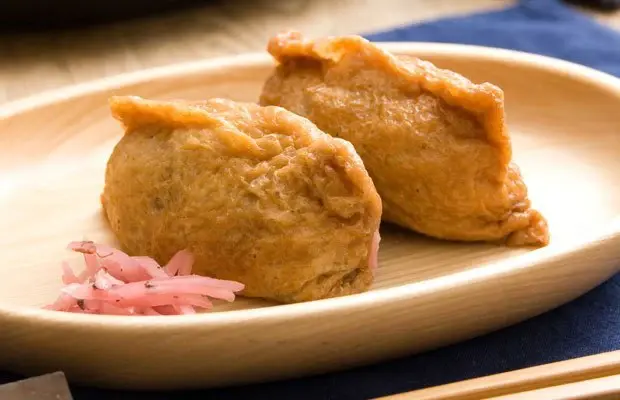
Festive Foods
Food is a big part of the celebration. The most famous is Inari zushi, said to be the foxes’ favorite. It is sushi rice wrapped in sweet fried tofu. Its shape changes depending on the region. In Kyoto and Kansai, it is usually triangular, like fox ears. In Kanto, it is barrel-shaped, symbolizing rice and a good harvest. People also enjoy fox-shaped sweets and pastries.

Regional Traditions
In regions that produce silk, such as Gunma, Gifu, and Toyama, people make Hatsuuma Dango. These are dumplings shaped like silkworm cocoons. They can be eaten in soup, sweet with red bean paste, or grilled with soy sauce.

Horse-Related Rituals
At some shrines, you might see horses adorned for prayer. People also give gifts to Batō Kannon, the horse-headed Kannon. Straw horses with rice cakes on their backs are sometimes left for Dōsojin, the protector of travelers.
How Do You Know When Horse Day Is?

To figure out Horse Day, you need two things: the 12 Chinese zodiac signs and the days of the month. The zodiac signs are: Rat 子(ね), Ox 丑(うし), Tiger 寅(とら), Rabbit 卯(う), Dragon 辰(たつ), Snake 巳(み), Horse 午(うま), Sheep 未(ひつじ), Monkey 申(さる), Chicken 酉(とり), Dog 戌(いぬ), and Wild Boar 亥(いのしし).
To find Horse Day, start counting from the first day of the month following the zodiac order. Rat Day is Day 1, Ox Day is Day 2 and so on. When you reach Horse, that’s the day! It’s a simple system once you know the pattern.

Want to experience Hatsuumasai? Check when Horse Day falls and visit a nearby Inari shrine to see all the unique horse-related traditions. Who knows, you might get lucky on your visit!
Picture Sources:
https://en.japantravel.com/photo/poi-40-213932/1200x630/kyoto-fushimi-inari-taisha-213932.jpg
https://totteoki.kyoto.travel/wp-content/uploads/2024/01/202402-12-fushimiinari-hatsuuma02.jpg
https://www.maff.go.jp/e/policies/market/k_ryouri/assets/uploads/2024/02/gifu_25_2.jpg
https://www.onmarkproductions.com/html/slideshows/SS-dosojin-kamakura-kinubariyama-hiking-trail.jpg
https://koreki543.com/wp-content/uploads/2023/11/24457230SQ-1024x1024.jpg
https://hugkum.sho.jp/wp-content/uploads/2022/01/25384042_m.jpg
Sources:


コメント