


Kabuki: Discover Japan's Timeless Theater Tradition


Picture a theater where actors stride through the audience instead of staying on stage. A single dramatic pose can earn cheers from the crowd, revolving stages transform entire scenes in seconds, and every movement, costume, and brushstroke of makeup tells a story long before a word is spoken. This is the world of Kabuki (歌舞伎), one of Japan's most celebrated performing arts and an experience unlike any modern theater.
With roots stretching back over 400 years to the Edo period (1603–1868), Kabuki has stood the test of time as one of Japan's three major classical theater forms alongside noh and bunraku. Today, it is recognized as a UNESCO Intangible Cultural Heritage, continuing to captivate audiences with its larger-than-life performances while remaining deeply connected to Japanese history and culture.

The Origins of Kabuki
The story of Kabuki begins in the early 17th century, during the early Edo period. Around this time, people known as kabukimono became famous for their flamboyant clothing, unconventional hairstyles, and eccentric behavior. Their bold fashion and rebellious spirit inspired a new dance style called kabuki-odori, performed by Okuni, a woman who introduced herself as a shrine maiden from Izumo Taisha in Shimane Prefecture.

Her performances combined dance with the colorful energy of the kabukimono, quickly becoming a sensation. As audiences grew, Kabuki evolved beyond dance by incorporating storytelling, acting, and live music, eventually becoming the theatrical art form we know today.
Even the word Kabuki reflects its essence. The characters literally represent song (歌), dance (舞), and skill or acting (伎), which are the three elements that continue to define every performance.

Why Are All Kabuki Actors Men?
One of the first things many visitors notice is that every performer on stage is male.
When Kabuki first emerged, women played all the roles. However, as the performances became increasingly popular, the Tokugawa shogunate banned women from appearing on stage. Young boys later took their place, but they too were eventually prohibited from performing. As a result, Kabuki developed into an all-male theater tradition that continues today.

This restriction gave rise to one of Kabuki's most fascinating specialties: onnagata, male actors who dedicate their careers to portraying female characters. Rather than simply dressing as women, the onnagata spend years perfecting graceful movements, subtle gestures, and elegant stage presence to create an idealized image of femininity. Actors specializing in male roles are known as tachiyaku.

What Makes Kabuki So Unique?
Kabuki is famous for turning theater into a visual spectacle.
Performances combine elaborate costumes, live traditional music, dramatic storytelling, and ingenious stage technology that was centuries ahead of its time. One of the most recognizable features is the hanamichi, a raised walkway extending from the main stage through the audience. Instead of entering from backstage, actors make dramatic entrances and exits directly beside the audience, creating an immersive experience that feels remarkably modern.

The stage itself is equally impressive. Revolving platforms allow scenes to change seamlessly without interrupting the performance, while trapdoors can suddenly raise or lower actors and add scenery for dramatic effect. These innovations, first developed in Japan more than 250 years ago, eventually influenced theaters around the world.

Another iconic feature is the dramatic pose known as mie, where an actor freezes at a climactic moment to emphasize emotion or reveal a character's inner strength. Combined with elaborate kumadori makeup, these striking poses have become some of Kabuki's most recognizable images. In Kabuki, makeup colors aren't just for show; they help convey what a character is to the audience. Red symbolizes heroic figures, blue is used for antagonists and evil spirits, while brown is commonly associated with otherworldly beings. It's worth noting, however, that not every Kabuki performance uses kumadori, as makeup styles vary depending on the play.
The Stories Behind the Performances
Kabuki offers an impressive variety of stories, with around 400 plays still performed today.
The two most common categories are jidaimono, which portray historical events and legendary samurai, and sewamono, which focus on the everyday lives, romances, and struggles of ordinary people during the Edo period. Many productions also draw inspiration from noh, kyogen, puppet theater, novels, and traditional storytelling, giving Kabuki a wide variety of stories and performances that continue to evolve today.
Because many classic plays originally lasted an entire day, modern performances often feature only the most memorable scenes from the story. Reading a summary beforehand can make it much easier to follow the story and appreciate the characters, especially if you're watching Kabuki for the first time.
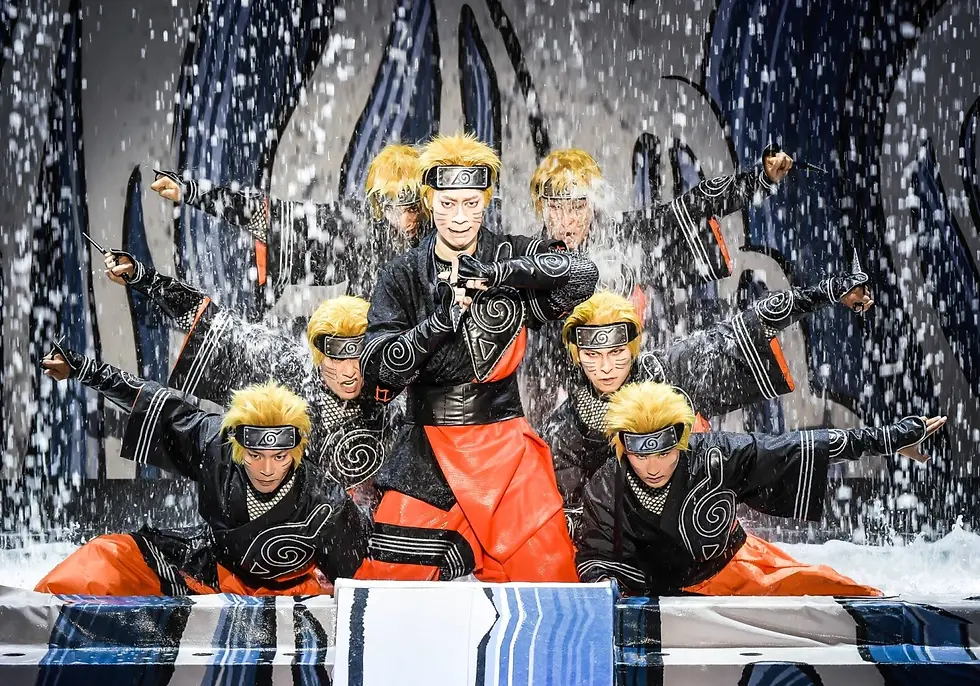
If you're looking for an easier introduction, Kabuki dance performances focus on music and choreography rather than dialogue, so language is rarely a barrier. There are also modern Kabuki productions that reinterpret manga, anime, and even virtual performers like Hatsune Miku while preserving traditional theatrical techniques.
Watching Kabuki for the First Time
Unlike many modern performances, there is no formal dress code for attending Kabuki. Comfortable, respectable clothing is perfectly acceptable, although some visitors enjoy wearing kimono for special occasions.
Once the performance begins, audience etiquette is similar to that of any theater. Arrive before the show starts, silence your phone, avoid talking during the performance, and remember that photography and video recording are prohibited. As for eating and drinking inside the theater, be sure to check with the venue beforehand, as each theater has its own policies.
One tradition that often surprises first-time visitors is hearing audience members shout an actor's stage name during key moments. Far from being disruptive, this is a long-standing custom that shows appreciation and encouragement. Since these stage names are passed down through generations and are closely connected to each actor's theater troupe, calling them out is a way of honoring both the performer and the tradition itself.
Where to Watch Kabuki in Japan
While Kabuki originated in major cities such as Edo (present-day Tokyo), Osaka, and Kyoto, it can now be enjoyed at theaters across Japan.

The Kabukiza Theatre in Tokyo's Ginza district is the country's most famous Kabuki venue and one of the easiest for international visitors. Performances are held almost every day, and English caption devices are available for rent, making it an excellent choice for first-time audiences.
Other well-known venues include:
Minamiza Theatre (Kyoto)
Osaka Shochikuza Theatre (Osaka)
Misonoza (Nagoya)
Hakataza Theater (Fukuoka)
Shinbashi Enbujo Theatre (Tokyo)
Most theaters offer both full-show tickets and single-act tickets, making it easy to fit kabuki into your itinerary.
Full-show tickets typically include access to the theater's restaurants before the performance and during intermissions, giving you time to enjoy a meal and explore the venue. Since performances often last between two and four hours, they also provide the comfort of having a reserved seat throughout the show.
If you're short on time, single-act tickets are a great alternative. They allow you to experience the atmosphere and artistry of kabuki without committing to an entire performance, making them especially popular with first-time visitors and travelers on a busy schedule.
If you want to be close to the action, consider choosing seats on the first floor or near the hanamichi. Seats near the stage also let you experience the live music, chanting, and sound effects up close.
For the best experience, consider renting an English-caption device if available. These guides translate dialogue, explain cultural references, and provide background information that can greatly enhance your understanding of the performance.

A Timeless Art That Continues to Evolve
Few performing arts have remained relevant for more than four centuries while staying true to their roots. Kabuki has continually adapted to changing audiences, introducing new stories and modern productions without losing the traditions that define it.
Whether you're drawn by the dazzling costumes, dramatic stage effects, timeless stories, or centuries-old theatrical techniques, Kabuki offers more than just entertainment, it provides a window into Japan's cultural heritage. Even if you only watch a single act, it's an unforgettable opportunity to experience a living tradition that continues to inspire audiences from around the world.
Picture Sources:
https://www.aoyama.ac.jp/wp-content/uploads/2025/02/Renjishi_03.jpg
https://wattention.com/wp-content/uploads/2019/09/Shibai-Kyogen-Uki-e.jpg
https://www2.ntj.jac.go.jp/dglib/uploads/kabuki_dic_en/1013/16_izumonookuni.jpg
https://www.tokyoweekender.com/wp-content/uploads/2026/01/kokuho-001.jpg.webp
https://le-masque-japonais.com/wp-content/uploads/2025/08/Heros-nobles-tachiyaku.png
https://enjyu-japan.travel/wp-content/uploads/2025/02/kabuki-experience-scaled.webp
https://cdn.gaijinpot.com/app/uploads/sites/6/2016/09/Kabukiza-Lead-.jpg
https://idsb.tmgrup.com.tr/ly/uploads/images/2024/07/12/thumbs/800x531/336529.jpg?v=1720774360
Sources:


コメント