


Make A Wish Upon A Daruma Doll


Have you ever walked around temples and stumbled upon small, angry-looking, round figures displayed in unexpected corners? Those are Daruma dolls (だるま), lucky charms traditionally used in Japan.
If you are feeling hopeful and ready to commit to a wish in your career, love life, or spiritual journey, why not try getting one and see how your wish grows stronger?
What Are Daruma Dolls?
Daruma dolls are more than just cute ornaments. They are goal-getting companions. Unlike other lucky charms that sit silently on a shelf, these little dolls ask for your participation.

Here is how it works. When you get a Daruma, you pick a specific goal and color in one eye. This turns the doll into a daily reminder of what you are working toward. Once you accomplish your goal, you fill in the other eye.
Darumas are also popular gifts to cheer someone on, whether it is passing an exam, getting into school, or tackling a personal challenge.
Here’s a fun fact: the tradition of painting the eyes comes from a clever Japanese pun. The word gan (眼) can mean “eye,” but it’s also part of gan-kake (願掛け), which means to make a wish or prayer.
How Daruma Dolls Came To Be
The face of Daruma dolls was inspired by a monk named Bodhidharma. He was an Indian or Central Asian monk who traveled to China around the 5th to 6th century. He was often described as having wide, intense eyes and a thick, untamed beard, much like the serious expression of Daruma dolls today.

Bodhidharma was a legendary figure. It is said that he attained enlightenment by staring at a wall in a cave for nine straight years, without moving or speaking. The silence and stillness eventually wore down his body and mind. To avoid falling asleep, he cut off his eyelids. Because he remained still for so long, his limbs slowly wasted away, yet he maintained an upright posture. These stories explain why Daruma dolls have no arms or legs and why their round, upright shape represents unwavering determination.
Although Bodhidharma lived centuries earlier, Daruma dolls appeared much later, around the 17th century. They are believed to have originated in Takasaki, Gunma Prefecture, which still produces over 80 percent of Japan’s Daruma dolls today. Some say a local priest wanted a charm that could last a whole year so farmers would not have to replace it annually. Others say farmers themselves asked for a more durable good luck charm. This is why Daruma dolls are kept until a wish is fulfilled, rather than being replaced every year.
The Many Symbols of the Daruma Doll

Shape
Daruma dolls belong to a type of toy called okiagari-koboshi, which has a rounded, weighted base that makes them right themselves when knocked over. This symbolizes perseverance and resilience and reflects the Japanese proverb 七転び八起き (nana korobi ya oki), which means “Fall down seven times, stand up eight.”
Eyes
When you first buy a Daruma doll, its eyes are left blank. This whiteness represents effort and intention, reminding the owner that wishes are fulfilled through hard work. The tradition began during the Edo Period, when smallpox outbreaks caused eye damage and even blindness. People painted the eyes themselves, seeking protection and healing, and the ritual stuck.
Eyebrows
The eyebrows are drawn large and feathery, resembling cranes. In Japanese culture, cranes are symbols of longevity and good fortune. This detail suggests continuity and well-being even after one’s wish has been fulfilled.
Mustache and beard
The mustache and beard are shaped like a turtle, another symbol of longevity. Together with the crane-shaped eyebrows, they echo the saying “Cranes live a thousand years, turtles live ten thousand years” and reinforce the Daruma doll’s association with long life and endurance.
Body
Large kanji characters are often written on the center of the Daruma doll’s body. These writings vary depending on purpose, ranging from happiness and success to business prosperity and protection, much like other Japanese talismans.
Red Color
Red is the traditional and most recognizable color. Some say it is inspired by Bodhidharma’s robe during his long meditation, which also explains the round, limbless shape. Others trace it back to Edo Period smallpox epidemics, when red was believed to ward off disease. Over time, red Daruma dolls came to symbolize healing and protection.
Modern Colors of the Daruma

While red is classic, modern Daruma dolls now come in many colors, each tied to a specific type of wish. Over time, these colors were introduced to help people choose a Daruma doll that aligns more closely with their personal goals and intentions. Here is a simple guide to what each color represents.
Red Daruma: general and overall luck
Yellow and Golden Daruma: money and financial fortunes
Blue and Turquoise Daruma: academic achievements and self-improvement
Green Daruma: health and well-being
Orange Daruma: fertility and child safety
Pink Daruma: good fortune in love and marriage
Purple or Violet Daruma: longevity and inner peace
White Daruma: success in exams, goal fulfillment, and new beginnings
Black Daruma: business prosperity
How To Use A Daruma

Now that you know what a Daruma is and how to pick one, it is time to put your wish into action.
Have a clear, specific, and achievable goal in mind.
Paint the first eye on the right eye of the doll.
Place the Daruma somewhere you will see it every day, like your desk or living room.
Work toward your goal through consistent action.
When your goal is achieved, color in the left eye.
Traditionally, a brush and black ink are used, but a simple black pen works perfectly fine.
What matters is your intention. When you draw that first eye, you’re not just coloring it in, you’re waking the Daruma doll up. This moment is called kaigen (開眼), and it’s when the doll is believed to receive its spirit and begin quietly watching over your goal.
After that, place your daruma doll somewhere high and visible, like on a shelf, your desk, or near an altar. Somewhere you’ll notice it often. Each time your eyes meet its gaze, it’s a gentle nudge to stay focused and keep going.
What to Do After Achieving Your Goal

One thing you should never do is throw your Daruma doll in the trash once your wish has been fulfilled. Instead, many people return it to the temple where they bought it.
Express your gratitude. Take a moment to thank the Daruma doll for watching over your goal.
Visit a temple. Bring your Daruma doll back to the temple you purchased it from, or any temple that holds a Daruma memorial service (daruma kuyō だるま供養).
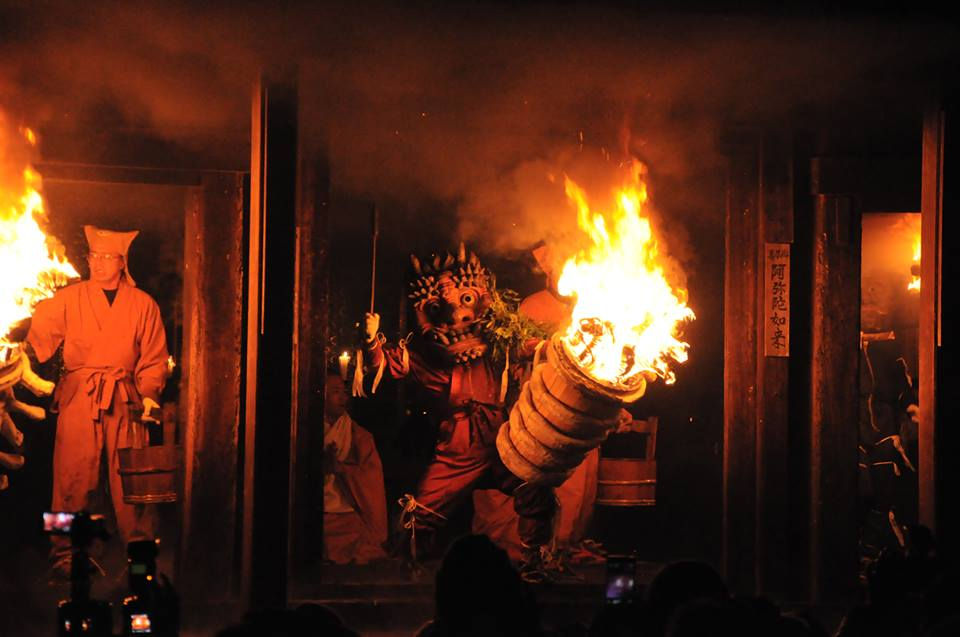
These temples hold a Daruma Fair, which includes a ritual called otakiage, in which old Daruma dolls are ceremonially burned in a large bonfire.
Time to Make Your Wish
If you ever come across a Daruma doll and feel like you need a little extra support to reach a goal, consider getting one. Make your wish, let it be a reminder of what you’re striving for, and see where your determination can take you. Sometimes we all need a quiet companion cheering us on, reminding us that it’s okay to fall as long as we keep getting back up.
Picture Sources:
Sources:


コメント