


Teru Teru Bozu – The Weather Dolls


If you have ever visited Japan, you may be familiar with these small white dolls, often seen hanging above the doorways of households and around local schools. For those who are not familiar, these are known as Teru Teru Bozu dolls (てるてる坊主). Often, they are seen donning their signature white cloth and large bulbous heads, giving them their iconic ghostly appearance.
What are Teru Teru Bozu Dolls, and Where are They Found?
A traditional Teru Teru Bozu doll is often hung up when someone wishes for the rain to end and the sun to return. Children often make them in schools, particularly before upcoming trips or other school-related events. The dolls’ link to childhood is what adds to their overall charm. The simplicity of their design makes them accessible to people of all ages. It connects the dolls to their creators; they become an extension of the feeling of hope. It also links human emotion and hope to one of the few phenomena that we cannot control: the weather.
From June to September, Japan experiences its summer months. June also marks the beginning of the rainy season, which continues until mid-July. This brings consistent muggy weather, and typhoons become increasingly frequent. Teru Teru Bozu dolls often appear during bleaker, more overcast weather.

On the surface, Teru Teru Bozu dolls are cute and childlike. However, their ghostly appearance represents their origin within Japanese folklore and superstition. This blend of childhood hope and folklore from generations past is what makes the dolls such an intriguing part of Japanese culture.
Japanese Folklore
In Japanese folklore, there is a type of Yokai, a term used to refer to supernatural beings, known as Hiyoribo. These spirits supposedly live high in the mountains and only appear when the sun is shining. They are said to vanish when the rain comes.
According to Japan’s Legendary Creatures, Yokai have existed within Japanese folklore for centuries, with no exact date for their origin. However, they do note that the concept of yokai did not gain public and recorded recognition until the 17th century. Illustrations of various Hiyoribo can be found in the artist Toriyama Sekien’s 18th-century collection of woodblock prints.

Despite their intimidating appearance, these specific yokai are considered embodiments of good weather, making them benevolent figures rather than symbols of disaster within Japanese folklore. Sekien himself theorised that Teru Teru Bozu dolls were crafted by women and children of the period, created with the intention of summoning and honouring the Hiyoribo spirit.
Origin of the name
Although the existence of Teru Teru Bozu dolls can be traced back to ancient folklore, they did not gain their current name until around 1921, with the rise in popularity of a simple nursery rhyme.

The lyrics of the song are written the perspective of the doll’s creator, who wishes for the spirit to bring them sunny and bright weather.
てるてるぼうず、てるぼうず 明日天気にしておくれ.
In English, this translates to: “Sunny, sunny monk boy, sunny monk boy, tomorrow, make the weather nice for me.” The creator calls upon the spirit with the promise of treats.
私の願いを聞いたなら, 甘いお酒をたんと飲ましょ.
This means: “If you listen to my wish, we’ll drink lots of sweet sake.”
This pleasant and innocent rhyme then takes an unexpected turn in the final lines of the song. The song concludes with:
それでも曇って泣いてたら そなたの首をちょんと切るぞ.
In English, this means: “If it should get cloudy and you weep, then I’ll cut off your head, snip!” As discussed in Tokyo Weekender, the song ends with a scary and demanding sentiment.
This demonstrates the interesting place that Teru Teru Bozu dolls hold in Japanese culture. From their appearance alone, they may seem like innocent symbols of childhood, yet exploring their history and context adds depth to their purpose. The Teru Teru Bozu nursery rhyme highlights this well, as it portrays a more demanding relationship between humanity and the Hiyoribo.
Koenji Hikawa Shrine
In the Koenji area of Tokyo, just a short walk from the station, lies Koenji Hikawa Shrine. Inside this shrine is the smaller Kisho Shrine. Kisho means “weather” in English, making this the “weather shrine”. The shrine is unique because it is dedicated to prayers for good weather, as many shrines around Japan, such as Ise Jingu, are dedicated to goddesses and other spiritual aspects of Japanese culture.

In and around this shrine, many Teru Teru Bozu dolls can be found, especially before major events in the local area or before major holidays.
The shrine holds an annual grand festival on 1st June. This time of year is used to celebrate community prosperity and to make wishes for luck in the future. Teru Teru Bozu dolls are commonly seen around the time of this festival, as they reflect the same wish for brighter and happier days ahead.
My experience at the Koenji Hikawa Shrine
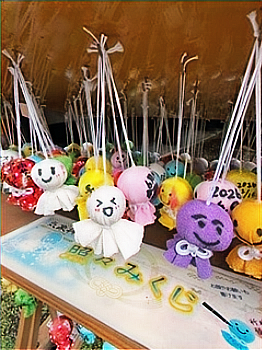
I took a trip to the shrine myself on a particularly sunny afternoon. This beautiful shrine is filled with Teru Teru Bozu dolls. Although the traditional colour for the dolls is pure white cloth, here they are displayed in an array of colours. This does not change their symbolism; instead, it is for aesthetic purposes, a factor that helps them really stand out to visitors and tourists. I thoroughly enjoyed my visit to the shrine, and it helped me better understand how and why Teru Teru Bozu dolls are used. If you are ever in the Koenji area of Japan, do not miss out on visiting this stunning shrine.
How to make a Teru Teru Bozu doll

There is some crucial information to note before you make a Teru Teru Bozu doll. The most important rule is to never draw the doll’s face first. According to Tokyo Weekender, this aspect of the making process dates back to the Edo period. One eye is to be drawn after the wish is spoken, and the other eye can only be added if the user’s wish comes to fruition. The doll’s blank expression represents potential, symbolising the hope for brighter skies.
Here is a quick step-by-step guide on how to make a Teru Teru Bozu:
• Wrap your white fabric or paper around the ball-shaped form you are using as the base for the head.
• Gather the fabric and secure the neck with an elastic band or string.
• Hang the doll by taping, sewing, or tying the string to the top of the doll’s head or neck. The head may provide better balance.
• Finally, fluff out the body to maximise its ghostly appearance.
• Celebrate the next day if your wish comes true by giving your doll a face!
The Counterpart

Be aware that if a doll is hung upside down, this is referred to as a “Fure Fure Bozu”. In English, this means “rain, rain monk”. This doll functions in the complete opposite way from the Teru Teru Bozu, as it is used to bring on rainy weather instead of willing it away. They can sometimes be spotted in black cloth instead of the usual pure white. Take note if you intend to make a doll of your own: be careful what you wish for!
Cultural Impact
Teru Teru Bozu dolls have had a direct impact on other parts of Japanese culture. They sparked the inspiration for the Pokémon “Castform”.

This pocket monster has the ability to change its form depending on the current weather conditions in the video game. Its bulbous head and ties to the weather are very reminiscent of a Teru Teru Bozu, demonstrating how the dolls have had an impact on popular culture.
Although they have an extensive history, they remain relevant both in popular culture and as part of a long-lasting Japanese tradition.
Teru Teru Bozu dolls may be small and simple, but they hold a lot of history and tradition. From folklore to childhood, they demonstrate how people in Japan have found a charming way to wish for better weather. For me, that is what makes them so intriguing: they are cute, slightly strange, and symbolise hope. Hope that the days ahead will be much brighter. They reassure us that the rain will eventually subside, a strong lesson that is applicable even in adult life. Sometimes we must weather a few storms to reach a warmer and more pleasant future.
Sites used:


コメント